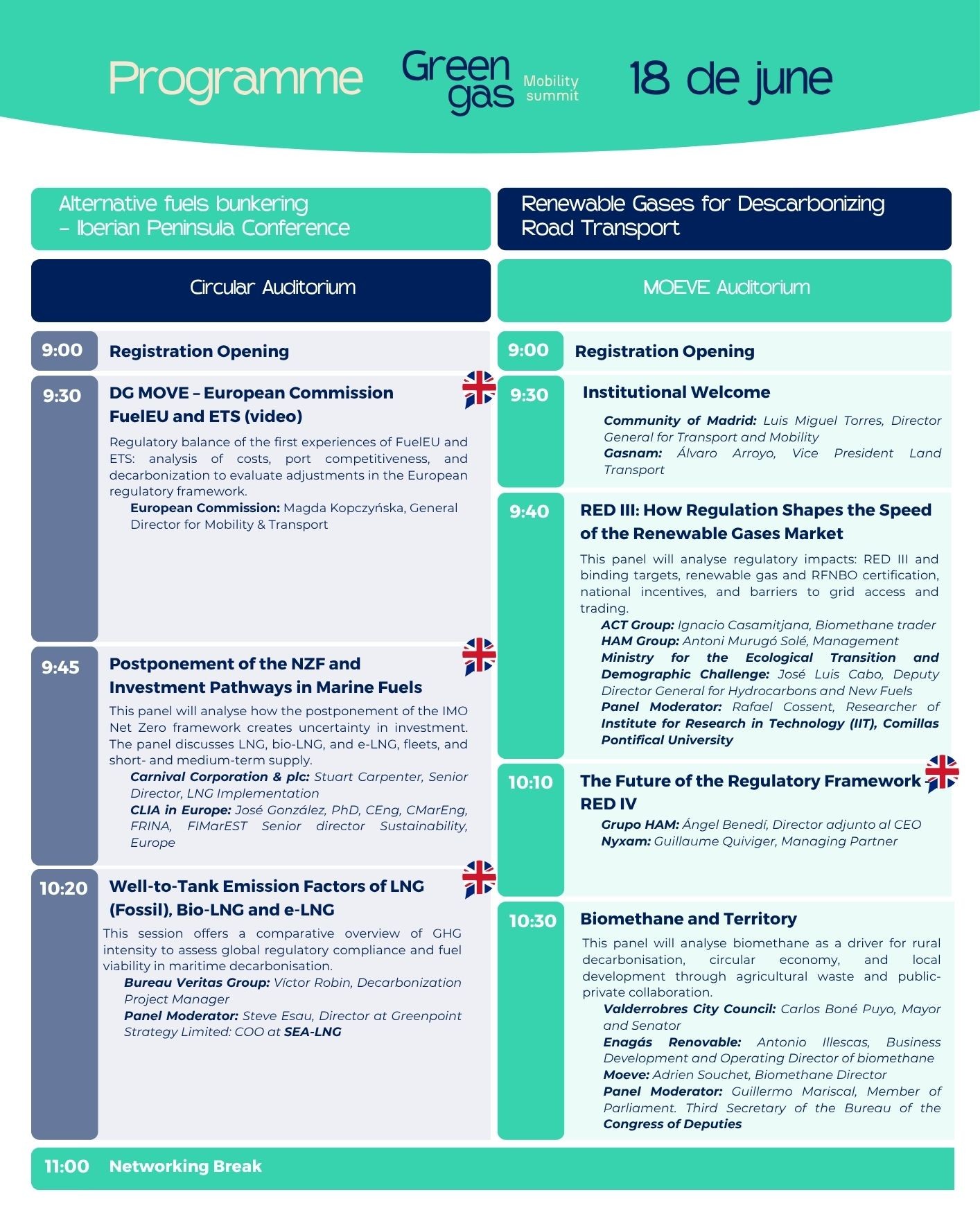
Regulatory Impact: How Regulation Shapes the Pace of the Renewable Gas Market
A clear and direct analysis of regulatory impact:
• RED III and binding targets
• Certification (renewable gases, e-fuels, RFNBO fuels)
• National incentives and support schemes
• Regulatory barriers to grid connection and trading
• Outlook towards 2030 and 2040
Energy in Transition: Market, Geopolitics and the Multifuel Future
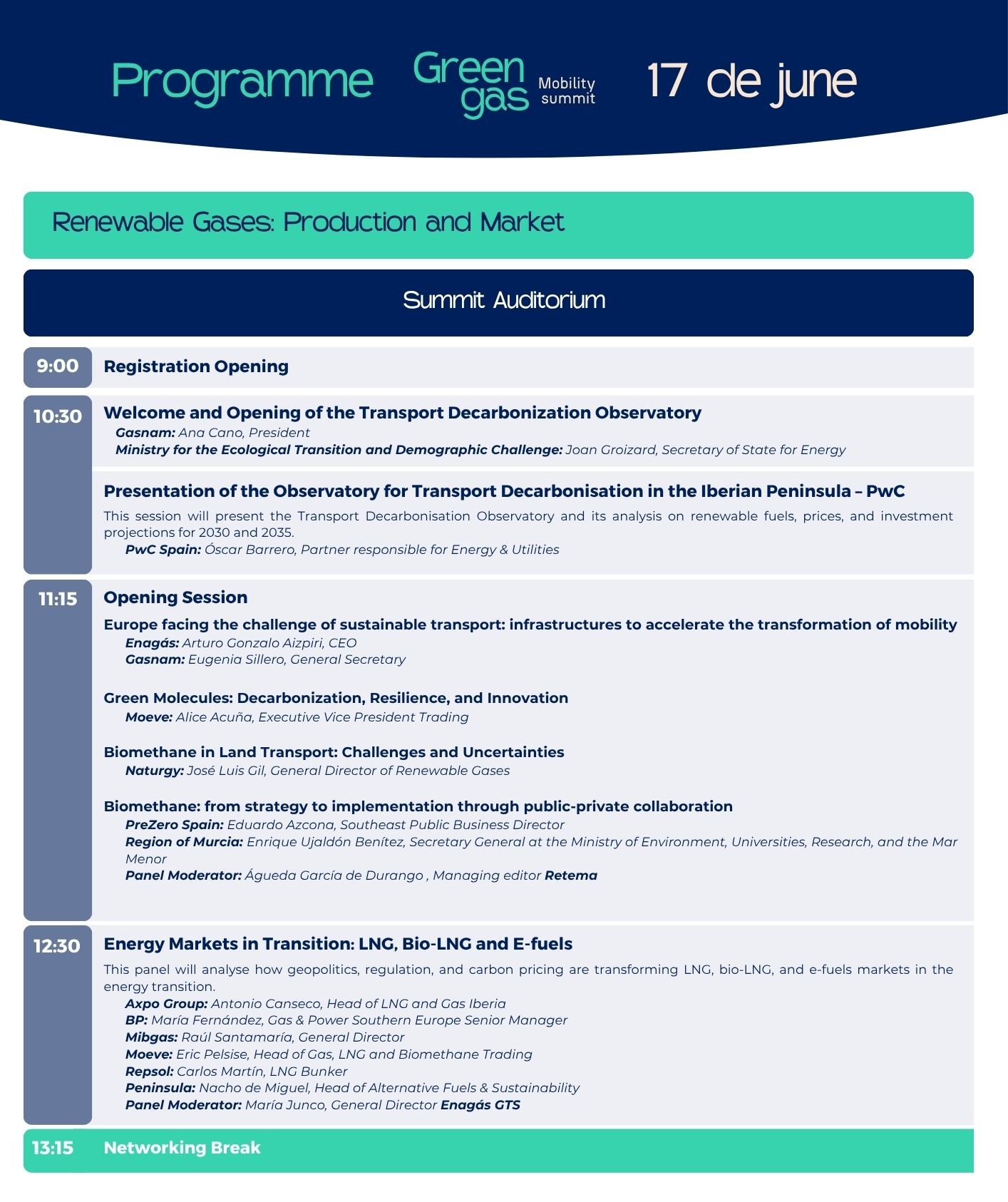
The energy transition is not only transforming fuels but also the market dynamics that underpin them. This session explores how LNG has evolved from a supply-demand-driven market into one heavily shaped by geopolitics and security of supply.
In parallel, bioLNG introduces a new dynamic where carbon value and regulation play a central role, moving away from traditional pricing mechanisms. Finally, e-fuels are emerging as a market still under construction, based on long-term contracts rather than liquid markets.
Financing, Investment & Bankability: Making Projects Work Financially
Key factors for project financing:
• Project finance models for renewable gases
• Technology and feedstock risks
• PPAs as a financing lever
• Guarantees of origin and monetisation of green attributes
• Role of banks, infrastructure funds, and institutional investors
From Strategy to Implementation: Public-Private Collaboration
This panel brings together public authorities and project developers to analyse how public-private collaboration can accelerate deployment, overcome regulatory barriers, and facilitate investment. Through real case studies, it will address coordination and permitting challenges, as well as the key factors to transform plans into viable and scalable projects.
Market Development, Trading & Off-Takers: From Production to Real Demand
This session addresses the key element for a functioning market: who buys biomethane and hydrogen, under what conditions, and through which contractual frameworks.
• Where is demand growing? Industry, mobility, heavy transport, ports, refining, chemicals, utilities
• Technical requirements and guarantees for off-takers (volume, purity, continuity, traceability)
• Trading mechanisms: PPAs, bilateral contracts, indexation, and pricing
• Major European consumers as success cases
• How to connect production → distribution → off-takers through viable schemes
Outlook 2026–2030: Scaling Up Renewable Gas Production
European and national perspectives on:
• Scaling biomethane plants and renewable hydrogen projects
• Costs and technological competitiveness
• Emerging demand trends
• European hubs and energy corridors
• The role of Spain and the Iberian Peninsula as strategic markets
Alternative fuels bunkering – Iberian Peninsula
Alternative Fuels Bunkering – Iberian Peninsula Global Hub
• Competitive advantages to attract green maritime traffic
• Iberia as a global hub for alternative fuels bunkering
• Evolution of LNG/bioLNG bunkering and consolidation of the Iberian Peninsula
• Benchmarking against other European hubs
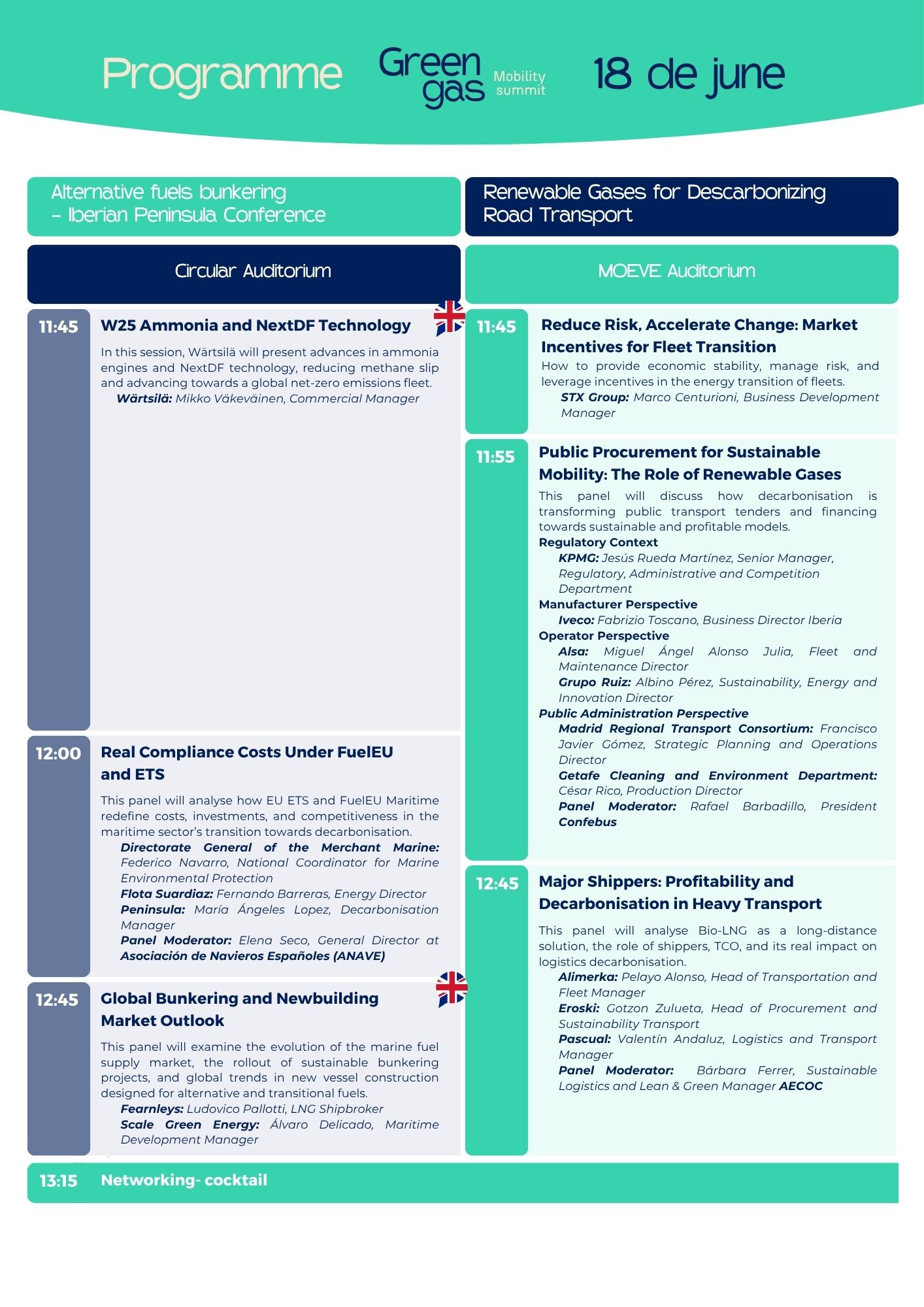
W25 Ammonia and NextDF Technology: Shaping the new fuels standards and redefining the limits of efficiency and methane slip
In a context where maritime decarbonisation demands tangible, high-performance solutions, Wärtsilä leads the way with the launch of the W25 Ammonia engine and its groundbreaking NextDF technology.
This session explores how integrating alternative fuels such as carbon-free ammonia, together with engineering advances aimed at drastically reducing methane slip, is redefining sustainability standards. It will analyse how these innovations optimise operational efficiency while providing a clear and scalable roadmap towards net-zero emissions for the global fleet.
Well-to-Tank Emission Factors of LNG, BioLNG and e-LNG
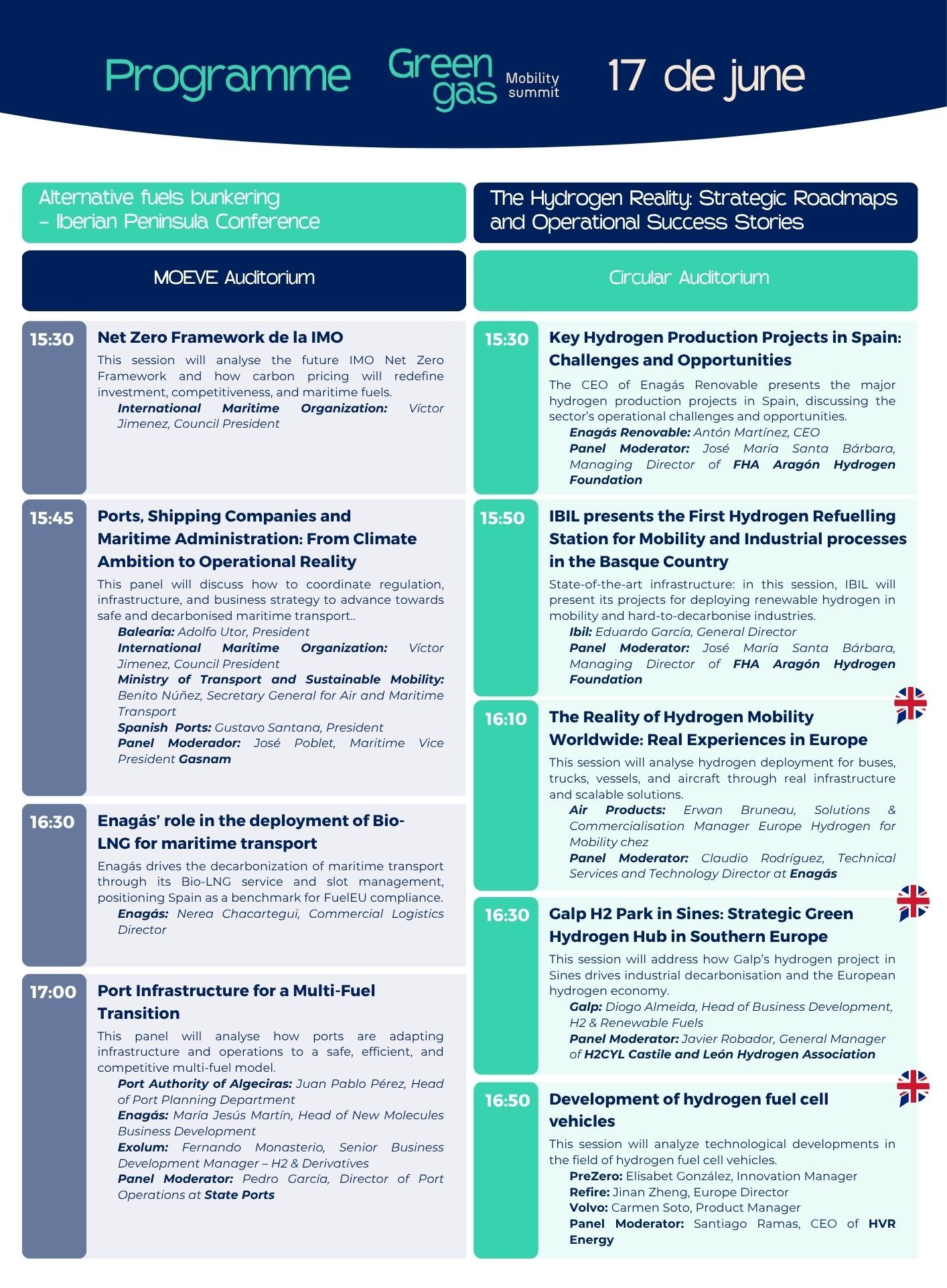
This session establishes a harmonised baseline to compare greenhouse gas (GHG) intensity across these energy carriers. The objective is to provide a clear view on compliance with new global regulatory frameworks and the viability of these fuels in fleet decarbonisation.
The IMO Net Zero Framework: Towards a New Global Regulatory Order in Maritime Transport
The International Maritime Organization is advancing towards a new global framework to decarbonise maritime transport: the Net Zero Framework. Outcomes from MEPC 84 point to a system combining fuel standards with a global carbon pricing mechanism.
This approach redefines the market—from technical regulations to clear economic signals driving low-carbon fuels. However, tensions remain regarding its design and impact. This session will explore expectations for the final framework and its implications for investment, competitiveness, and fuel deployment.
The Real Cost of Compliance under FuelEU and ETS
The entry into force of EU ETS and FuelEU Maritime is redefining operational costs in maritime transport, requiring carbon pricing to be integrated into decision-making.
This session will analyse the real impact of compliance on profit and loss, strategies to manage volatility and optimise emissions, and the technological dilemma between retrofitting and new investments. It will also address financing challenges, stranded asset risks, and implications for global competitiveness—within a context where decarbonisation becomes not only a regulatory obligation but a key factor in efficiency and strategic positioning.
Investment, Partnerships & Ecosystem Growth in Iberia
• Investment models for bunkering vessels and terminals
• Partnerships between energy operators and shipping companies
• National and European incentives
• Public-private coordination
Spain and the ETS & FuelEU Maritime
This presentation analyses the strategic role of the Spanish Directorate General of the Merchant Navy in implementing the Fit for 55 package, focusing on the integration of the maritime sector into the EU ETS and the requirements of FuelEU Maritime.
Through a technical and operational analysis, it will address the complex management of supervision processes, the new role of Maritime Authorities in monitoring energy intensity, and the mechanisms being deployed to ensure a fair transition that protects the competitiveness of Spanish ports in the global decarbonisation landscape.
Renewable Gases for Descarbonizing Road Transport
IBIL Presents the First Hydrogen Refuelling Station for Mobility and Industrial processes in the Basque Country
Cutting-Edge Infrastructure: This presentation introduces IBIL’s project for deploying renewable hydrogen supply infrastructure. Real projects designed specifically for mobility and decarbonization of industrial processes hard-to-abate will be analysed, ensuring efficient, safe, and 100% renewable supply.
The Reality of Hydrogen in Global Mobility: Real-World European Experiences
This session analyses hydrogen deployment as a tangible solution for decarbonising heavy-duty and long-distance transport in Europe, moving beyond theory to showcase real operational success cases in buses, trucks (Daimler), vessels, and aircraft.
Real-world experience with liquid hydrogen refuelling stations will be presented, highlighting their critical role in range and logistics efficiency. Attendees will gain insight into how current infrastructure and vehicles are transforming sustainability requirements into an operational and scalable reality.
Alternative Fuel Supply Infrastructure in the Iberian Peninsula
The Alternative Fuels Infrastructure Regulation (AFIR) sets binding targets, while the National Action Framework defines implementation at country level. This session will analyse deployment status, regulatory and investment challenges, and how to align public planning with private execution to ensure a sufficient, coordinated, and viable network.
Transport Decarbonisation Observatory in the Iberian Peninsula
A strategic initiative developed by Gasnam in collaboration with PwC to lead the energy transition in Spain and Portugal.
This presentation introduces a key tool analysing demand and availability of new fuels towards 2030 and 2035, assessing price evolution and economic impact for operators. Discover how this partnership between sector experts and top-tier consultancy provides the technical and regulatory intelligence needed to turn sustainability targets into profitable and secure investment decisions.
Public procurement of Sustainable Mobility: the role of renewable gases
This session examines the regulatory obligations surrounding the decarbonization of mobility within public procurement processes and their impact on tender specifications. It will analyze the available energy alternatives to ensure compliance with environmental criteria and the economic viability of concessions, while discussing how new procurement and financing models are transforming passenger transport into sustainable and cost-effective solutions for both operators and public authorities.
BioLNG Viability and Profitability in Long-Haul Transport: From TCO to Real Fleet Operations
This session analyses bioLNG as a key solution for decarbonising long-haul transport, balancing environmental impact with financial performance. Through TCO analysis and real case studies, it will explore how incentives and operational efficiency enable logistics operators to transition their fleets towards sustainable and economically viable models today.