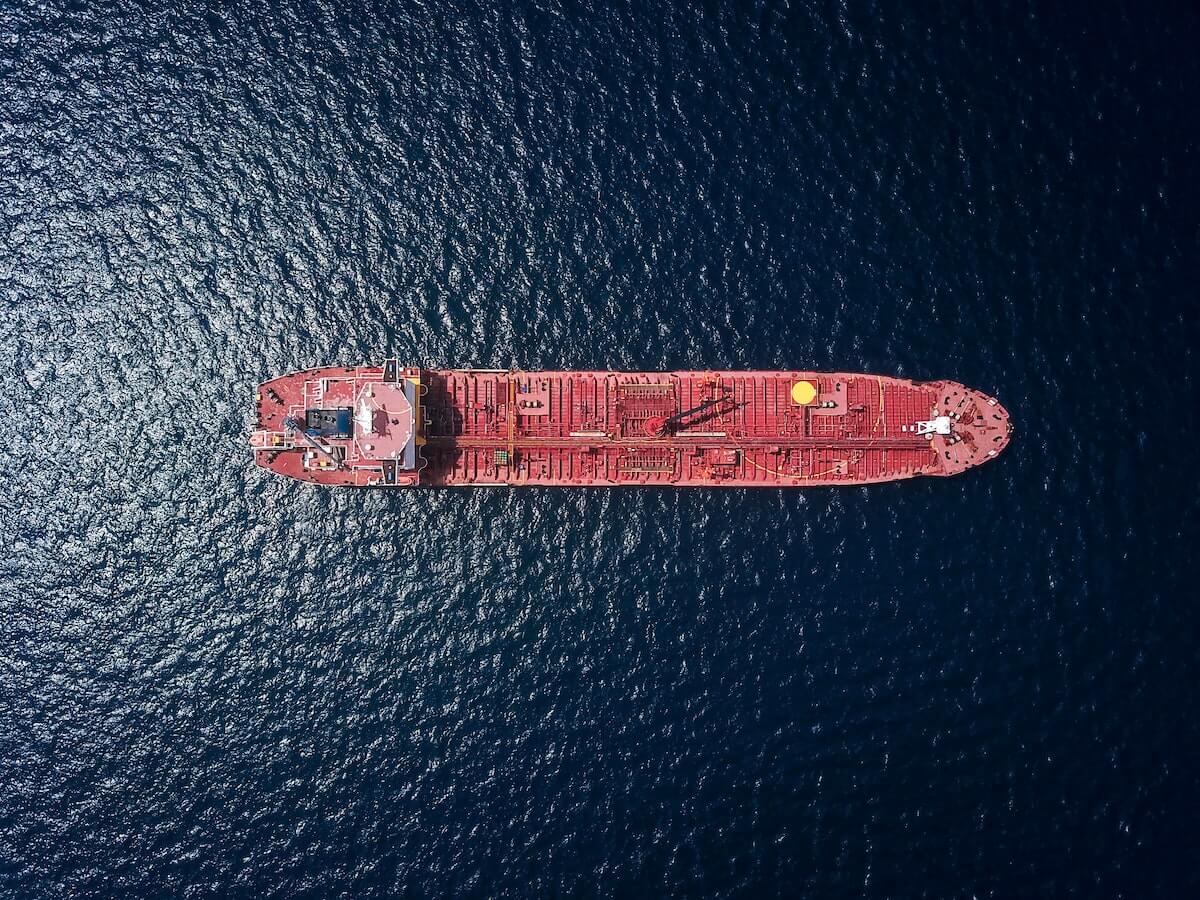
Today, hydrogen is mainly produced close to where it is consumed, but as the volume of production increases to meet growing demand, there will be a greater need to boost cross-border traffic.
Did you know that the use of biomethane in transport already has solid experience in our country? In this webinar we will analyse the success stories that show that this emission-neutral fuel is an immediate solution for the decarbonisation of transport.
Today, hydrogen is mainly produced close to where it is consumed, but as the volume of production increases to meet growing demand, there will be a greater need to boost cross-border traffic.
While this evolution will require harnessing or building new hydrogen infrastructure, maritime transport may also provide a solution to this major challenge, which is conditioned by hydrogen’s low energy density and low boiling point.
Hydrogen can be transported by sea in the form of liquefied hydrogen, compressed hydrogen, as ammonia, methanol or by means of an organic chemical carrier. In this conference we will analyse the work developed in the Hydromar Project, where a tool has been created to identify the most appropriate way to transport hydrogen by sea according to different scenarios.
Don’t miss it and register here to follow the webinar and receive the recording of the event afterwards.
We remind you that these contents, and many more, are being organised within the framework of the Green Gas Mobility Summit, the reference event on sustainable transport in the Iberian Peninsula, which will be held on 20 and 21 September 2023 in La Nave (Madrid).
We are waiting for you!
10:00 h : Welcome
Eugenia Sillero Secretary General of Gasnam-Neutral Transport
10:05 h : What do ships for transporting hydrogen have to be like? Design and features
Julia CabanesCotenaval Technical Department
10:15 h : Are ports ready for hydrogen transport? Safety and implications
Ángel SanturtunHead of Cabinet of ADIMDE (Basque Maritime Industries Association) of the Basque Maritime Forum.
10.25 h : Case studies: different hydrogen shipping routes
José Alfredo Lana Enagas Hydrogen Infrastructure Analysis and Development Coordinator
10.35 h : Tool to visualise the different forms of hydrogen maritime transport
José Ignacio Domingo Cidaut Project Manager
10.45 h : Debate and questions
10.55 h : Conclusions and end of the webinar
14 March 2023 | 10:30 AM
Why biomethane is already a reality in transport in Spain. Successful cases of use
Do you want to attend the webinar?
Biomethane has become a key vector for the decarbonisation of the energy and transport sector. For this reason, the European Commission, through its REPower Plan, has sought to give more weight to this renewable gas by doubling the target proposed in the Fit for 55 package to reach a production of 35 billion cubic metres (bcm) per year by 2030.
Although Spain is the fourth largest producer of biomethane, with 163 TWh/year, which would allow us to cover around 45% of the national demand for natural gas, there are currently only a few plants injecting this green gas into the grid. And if we talk about its use in transport, it seems utopian, but nothing could be further from the truth.
The use of biomethane in road transport of goods and passengers already has solid experiences of success in our country, which have long since ceased to be pilot projects. In this webinar we will analyse these success stories, the peculiarities, challenges and challenges they face, with the aim of demonstrating that biomethane is already an immediate solution for the decarbonisation of transport.
Stay tuned and register to follow the webinar and receive the recording of the event afterwards.
We remind you that these contents, and many more, are being organised within the framework of the Green Gas Mobility Summit, the reference event on sustainable transport in the Iberian Peninsula, which will be held on 20 and 21 September 2023 in La Nave (Madrid).
We are waiting for you!
10:30 h |Welcome
Eugenia Sillero Secretary General of Gasnam-Neutral Transport
10:35 h | Community of Pamplona. Integral project for production and mobility with biomethane.
Álvaro Miranda Director of Climate Change and Singular Service Projects of the Pamplona Regional Government
10:50 h | Zaragoza Transport Consortium. Inclusion of biomethane, with extra points, in the bus tender specifications.
Juan Ortiz Managing Director of the Zaragoza Area Transport Consortium
11.05 h | Logistics. Biomethane expertise from the leading sustainable logistics operator
Luis Miguel Berdasco Operations manager de HAVI Spain
11.20 h Naturgy. The trader's experience with biomethane availability and guarantees of origin